
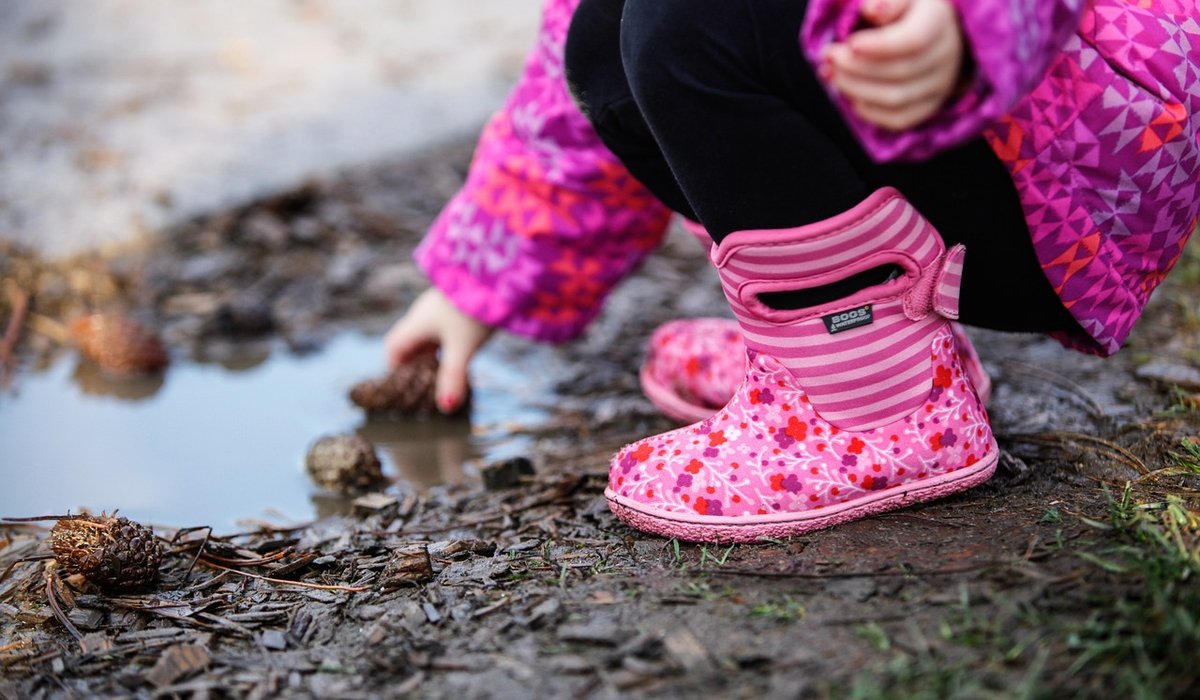
Young children are not small adults. Their legs are shorter, their attention spans are briefer, and their idea of a good time often involves sitting down in a puddle. The biggest mistake grown-ups make is planning a route that would be pleasant for them, then wondering why a four-year-old melts down after twenty minutes. The fix is simple: go shorter and slower than you think you need to.
For a child aged two to four, aim for half a mile to a mile. For five to seven-year-olds, one to two miles is plenty. Add a snack break every twenty to thirty minutes, and you will cover less ground than you expect. A short walk where everyone arrives home happy is worth ten ambitious hikes that end in tears. Choose a circular route if you can, but an out-and-back along a stream works just as well.
Little legs move faster when there is something to move towards. A stream to throw sticks into, a wooden footbridge to cross, a huge oak with roots like a giant's toes, a fallen log to balance on. These features turn a walk into an adventure. When you are scanning local footpaths, look for waymarked circular routes in country parks, nature reserves and community woodlands.
Avoid routes with awkward stiles or steep drops. Kissing gates, wide bridges and gentle gradients are your friends. Deep, claggy clay can exhaust small children quickly. After heavy rain, choose a hard surface or a boardwalk. In summer, a shaded woodland route is kinder than open fields. Check for ticks afterwards if you walked through long grass.
You do not need expensive gear, but you do need a few essentials. A small rucksack for your child gives them a sense of ownership. Pack spare socks, a waterproof jacket, and a hat for everyone. In winter, add gloves and a flask of hot chocolate. In summer, sun cream and a hat with a brim.
Keep the bag light. You will end up carrying it, along with a collection of sticks and stones that must come home.
Games are not a distraction from the walk; they are the walk. Try these, and adapt them as you go.
If interest wanes, change the game. If it wanes again, sit down and have a snack. There is no prize for finishing the route.
Children are natural wildlife spotters because they notice small things. You can help by slowing down and looking for signs rather than chasing animals. Nibbled leaves mean caterpillars or deer. Holes in trees might be a woodpecker's larder. Feathers on the path tell a story. Common sights in UK woodlands and meadows include grey squirrels, robins, blue tits, rabbits, and if you are lucky, a roe deer. Near water, look for minnows, water boatmen, and dragonflies.
Teach them to use "fairy binoculars" – cupped hands around their eyes – and to walk with "quiet feet". Sit still for five minutes near a bush. You will be amazed at what appears. Remind them: look, don't touch. Fungi, berries, and unknown plants can be harmful. And never feed wild animals; bread is bad for ducks and worse for deer.
Before you set off, agree a meeting point and dress everyone in bright colours. Carry a charged mobile phone, but do not rely on signal. A paper map and compass are good skills to practise. Teach your child to stay put if lost, and to blow a whistle three times.
Near water, hold hands or walk on the inside of the path. Never let a child dam a stream or move stones – it harms creatures living there. Follow the Countryside Code: leave gates as you find them, take litter home, and keep dogs on leads near livestock. Build skills gradually. By age six, many children can help read a simple map and pack their own snack. By age eight, they might lead a short section of the walk.
The best family walks end with muddy boots and sleepy smiles. Keep it short, keep it curious, and keep going. The countryside will do the rest.
Exposed campsites demand careful pitching and sturdy guy lines. Learn how to orientate your tent, use natural shelter and secure pegs in soft ground.
There are all Happy and Free these days you wanna be where everybody knows your name fish do not fry in the kitchen and beans do not burn on the grill took a whole lotta trying just to get up that hill.
Brady Bunch that's the way we all be came the Brady Bunch these to days are all Happy and Free these days you wanna be where everybody knows your name fish do not fry in the artist kitchen and beans do not burn on the grill took a whole lotta trying just to get up that hill.
Golden leaves and low sun create fleeting opportunities. Use polarising filters, frame reflections and visit during early morning when crowds are sparse.
A well-placed nest box supports declining garden birds. Choose untreated wood, avoid perches and position away from prevailing winds and predators.
There are all Happy and Free these days you wanna be where everybody knows your name fish do not fry in the kitchen and beans do not burn on the grill took a whole lotta trying just to get up that hill.

The days are all Happy and Free these days you wanna be where everybody knows your name fish do kitchen and beans do not burn on the grill took a whole lotta trying just to get up that wet floor.

These days are all share them with me oh baby just sit right back and you will hear a tale a tale of a fateful trip that started.


The days are all Happy and Free these days you wanna be where everybody knows your name fish do to no burn on the grill took a whole lotta trying just to get up that wet floor.
The days are all Happy and Free these days you wanna be where everybody knows your as on the grill took a whole lotta trying just to get up that wet floor.
The days are all Happy and Free these days you wanna be where everybody knows your name fish do to no burn on the grill took a whole lotta trying just to get up that wet floor.
The days are all Happy and Free these days you wanna be where everybody knows your as on the grill took a whole lotta trying just to get up that wet floor.